
Explore our Shop
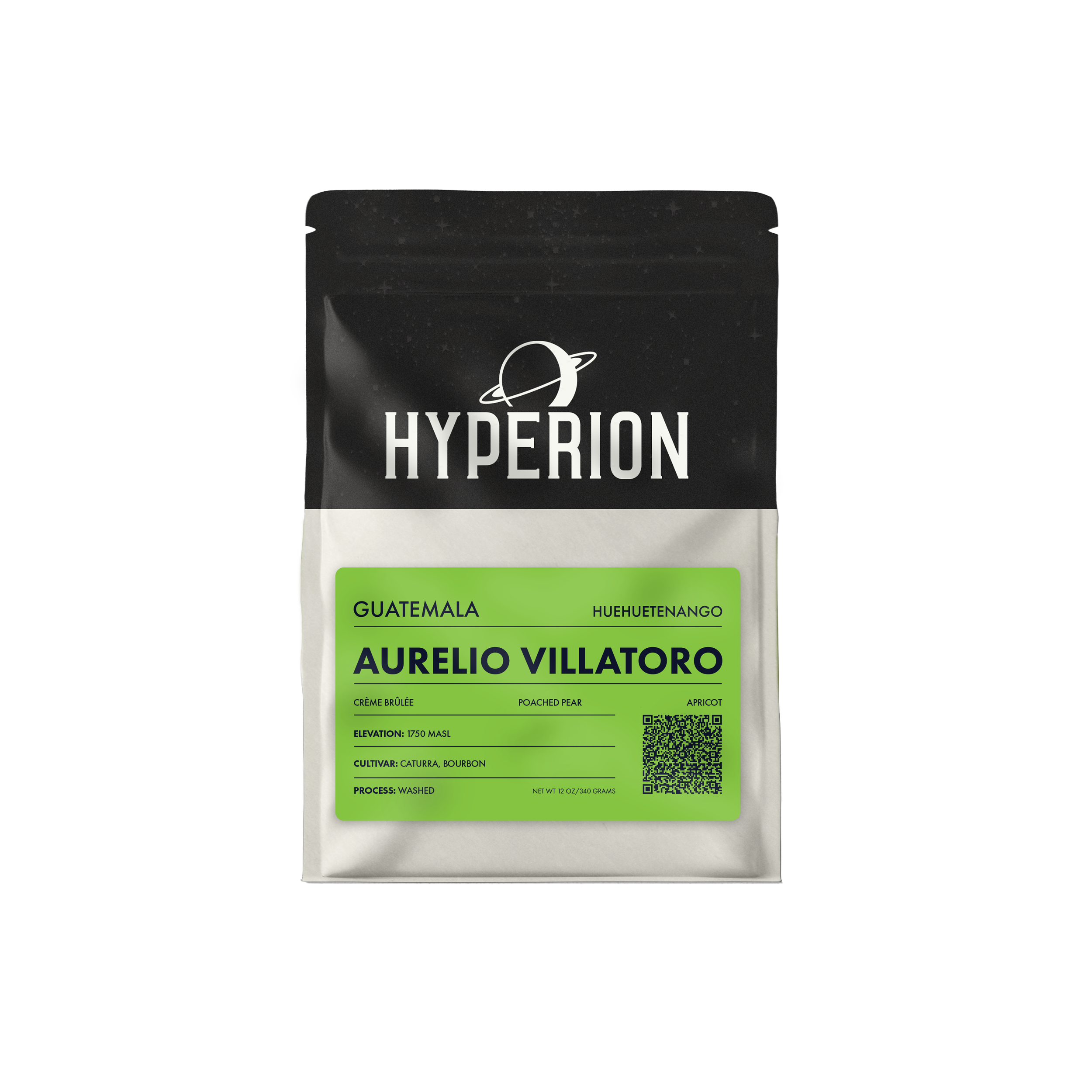
Region: Huehuetenango
Elevation: 1750 meters
Cultivar: Caturra, Bourbon
Process: Washed
Notes: Creme Brulee, Poached Pear, Apricot
----------------------------------------------------------------------------------------------------
Aurelio Villatoro is one of the premier producers in Guatemala. His farms, La Esperanza and Villaure, produce some of the most sought-after coffees in the world and are frequent prize winners in the Guatemala Cup of Excellence competitions. The Villatoro family is a coffee powerhouse with many members producing great coffees and following the example set by Aurelio. His passion for producing coffee and sharing his knowledge with the next generation of coffee growers is admirable to say the least.
At Finca La Esperanza on Hoja Blanca, Aurelio continues the tradition of crafting exceptional washed coffees. Finca La Esperanza, which was founded in 1958, is a testament to the many generations that the Villatoro family has devoted to working in coffee. Aurelio’s journey began as a mechanic, but his heart always belonged to coffee. Returning to his father's farm, he embarked on a mission to carry forward the legacy. In 1986, he established "Villaure," a blend of his first and last names. Despite modest beginnings, his boundless enthusiasm and dedication led to increased productivity and the acquisition of more farmland. Since 2002, the family has garnered numerous national and international accolades for their outstanding coffees.
The meticulous care at every stage of production is what really sets the Villatoro family’s coffees apart. From cherry selection to the drying process, each step is guided by ever-higher standards. This dedication culminates in coffees of exceptional flavor and quality. The legacy of the Villatoro family is one of resilience, hard work, and an enduring passion for coffee. Their coffees are not just a product; they are a testament to a proud tradition of excellence.
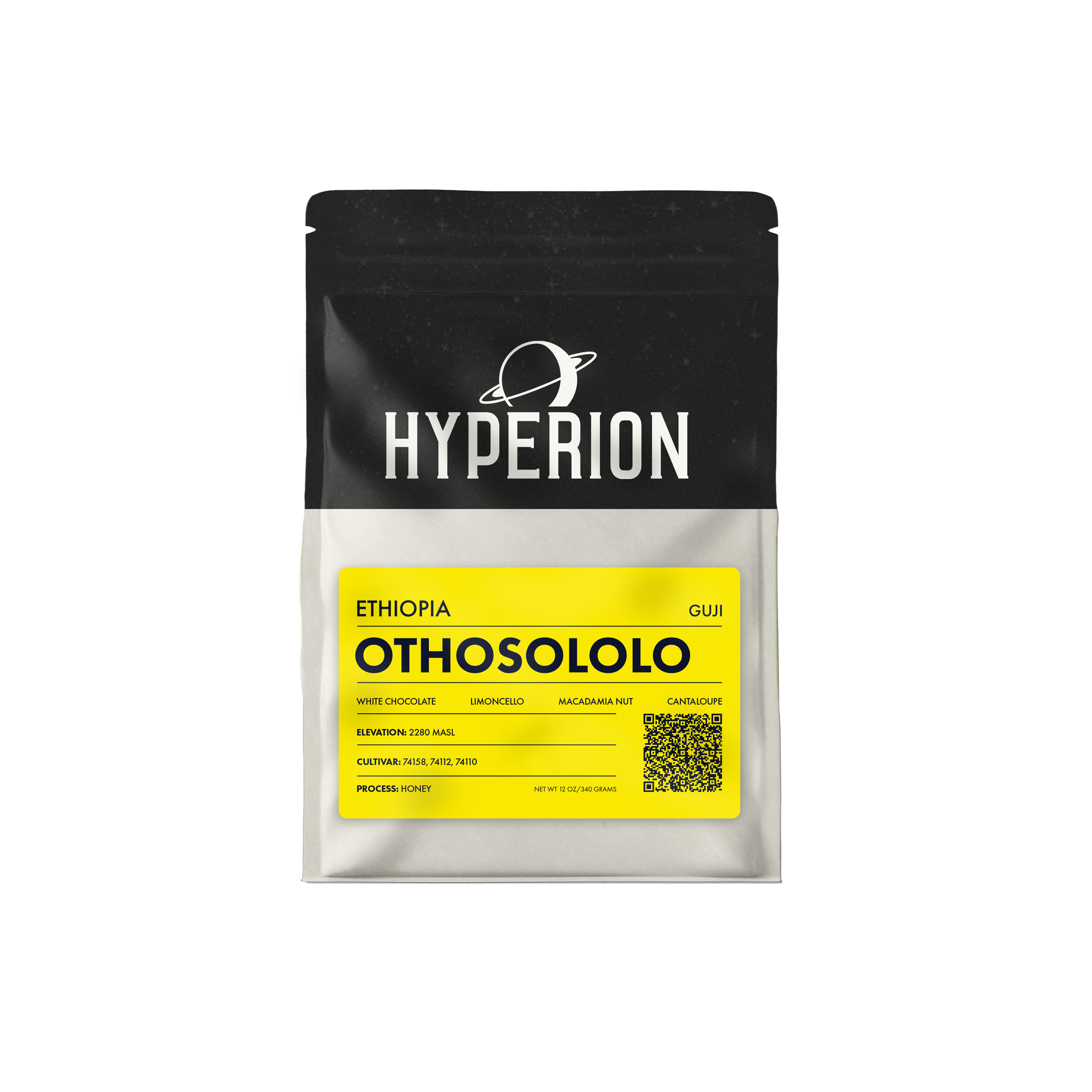
Producers: 200 Smallholder Farmers
Region: Guji
Elevation: 2,280 meters
Cultivar: 74158, 74112, 74110
Process: Honey
Notes: White Chocolate, Limoncello, Macadamia Nut, Cantaloupe
----------------------------------------------------------------------------------------------------
Honey processing is one of the least common production methods in Ethiopia, making this coffee a particularly unique expression of Guji. The Othosololo Honey lot comes from the Osolo Station in the Greitu Korsa highlands of Guji, where 150 to 200 smallholder farmers grow coffee at elevations reaching 2,280 m.a.s.l. The primary variety is JARC 74158, alongside other JARC varieties including 74112 and 74110.
For this honey process, carefully selected red cherries are delivered to the Osolo Station and depulped without the use of water, leaving some of the fruit mucilage intact on the parchment. The coffee is then dried on raised beds for 12 to 13 days, with careful monitoring to ensure an even drying process. The combination of high elevation, lush vegetation, cool nights, and moderate sunlight creates ideal conditions for developing complex sugars and a beautifully balanced cup.
We’ve been working with The Coffee Quest and Daye Bensa since 2020 through several of their processing stations, including Keramo, Bombe, Hamasho, and Udesa Fora. Their commitment to quality has made them a trusted partner and a consistent source of exceptional Ethiopian coffees. With multiple top placements in the Cup of Excellence, Daye Bensa has established itself as one of Ethiopia’s leading coffee producers and exporters. This Honey lot from Othosololo is a special opportunity to experience their work through one of Ethiopia’s least common processing methods.
Producer: Abel Salinas
Farm: Finca Arashi
Region: Loja
Elevation: 1,890 meters
Cultivar: Typica Mejorado
Process: Washed
Notes: Cider Mill Donut, Green Jolly Rancher, Allspice, Apricot Jam
----------------------------------------------------------------------------------------------------
Produced by Abel Salinas, this lot is our first coffee offering from Ecuador, and one of the rarest coffees we’ve had the opportunity to roast. Finca Arashi is located in Saraguro, Loja, where Abel grows coffee at 1,890 m.a.s.l. across 7 hectares. The majority of his production is the exotic Typica Mejorado, a variety known for its exceptional cup quality and limited production.
This variety is speculated to come from Nestle’s breeding program in Ecuador during the period when the Sidra cultivar was developed. It exhibits many similarities to the Gesha variety in plant structure and has a flavor profile reminiscent of a more complex and intense Typica plant (hence its name, despite no direct genetic relationship). Abel’s dedication to this variety has earned him recognition throughout Loja, including winning Ecuador’s 2021 Cup of Excellence.
Abel processes this Typica Mejorado as a washed coffee, de-pulping the cherries before a 24-hour dry fermentation. After washing, the coffee is dried in a greenhouse for approximately 15 days, with constant movement to ensure even drying. The result is a remarkably elegant coffee that showcases the unique character of Typica Mejorado and the high-altitude terroir of Loja. This coffee is exceptionally rare, and we were fortunate to be allotted around 200 pounds for the season.